Beyond Scent: A Story Rooted in Ritual
Long before essential oils found their place in modern vanities, they were integral to rituals that blurred the line between beauty, medicine, and spirituality. In ancient Egypt, aromatic oils were used in anointing ceremonies and daily skincare alike. In Greece and Rome, physicians prescribed plant essences for both physical and emotional balance. Across India, essential oils were embedded in holistic systems such as Ayurveda, where beauty was understood as an outward reflection of internal harmony.
These traditions did not separate the sensory from the therapeutic. Scent was not simply enjoyed—it was experienced as something that could influence mood, perception, and even vitality. Today’s concept of “energy-charged beauty” draws heavily from these origins, though often without the same nuance.
Origins: The Philosophy Behind “Energy”
To understand energy-charged beauty, one must first unpack the idea of “energy” itself. Historically, it was never about mysticism alone. Rather, it referred to the observable effects of plants on the body and mind.
Essential oils are highly concentrated extracts, capturing the volatile compounds of botanicals. These compounds interact with the skin and the olfactory system, influencing both physiology and emotion. The calming effect of lavender, the invigorating quality of citrus, the grounding depth of sandalwood—these are not abstract notions, but responses rooted in chemistry and neurology.
Ancient practitioners may have described these effects in terms of balance or life force, but their observations align closely with what modern science now confirms: scent has a direct pathway to the brain, capable of shaping mood and perception almost instantly.
Techniques: From Extraction to Application
The integrity of essential oils lies in how they are produced and used. Traditional methods, still respected today, emphasize purity and precision.
Distillation and Expression
Most essential oils are obtained through steam distillation, a process that separates aromatic compounds from plant material without degrading them. Citrus oils, by contrast, are often cold-pressed, preserving their bright, volatile character.
Dilution and Blending
Unlike ancient perfumed oils, essential oils are rarely used undiluted. They are typically blended with carrier oils—such as jojoba or almond—to ensure safe application and optimal absorption. This step is crucial, transforming a potent extract into a skin-compatible formulation.
Application as Ritual
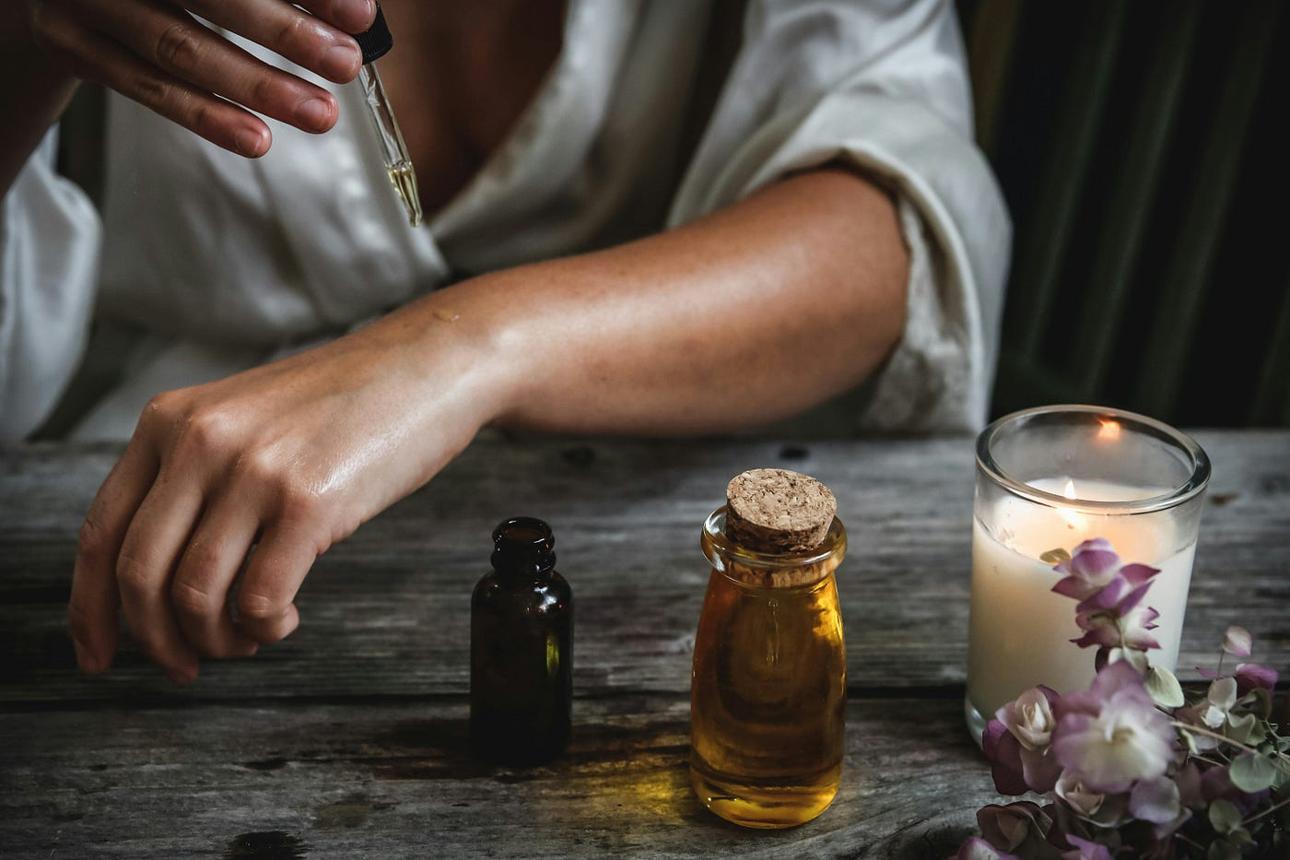
Whether massaged into the skin, added to baths, or diffused into the air, essential oils are most effective when used with intention. The act of application—slow, deliberate, and sensory—remains as important as the ingredient itself.
The Reality of “Energy-Charged” Claims
Modern beauty language often elevates essential oils into something almost mystical, suggesting they can “raise vibrations” or “infuse energy” into the skin. While evocative, these claims can obscure the real value of these ingredients.
The truth is more grounded, and perhaps more compelling.
Essential oils do not alter the skin’s energy in a metaphysical sense. What they do is:
- Stimulate the senses, influencing mood and emotional state
- Deliver bioactive compounds that can soothe, clarify, or balance the skin
- Enhance the overall experience of a skincare ritual
In other words, their power lies in the interplay between physical effect and sensory perception. The “energy” people feel is often the result of relaxation, focus, or invigoration—responses that are entirely real, even if not mystical.
Enduring Relevance: Why Essential Oils Still Matter
In an era of highly engineered skincare, essential oils offer something increasingly rare: immediacy. Their effects are felt not just over weeks of use, but in the moment of application.
This dual function—tangible skin benefit paired with sensory impact—ensures their continued relevance. They align with a broader shift toward mindful beauty, where how a product feels is as important as what it does.
At the same time, modern understanding has brought necessary balance. Consumers are more informed about concentration, sensitivity, and the importance of formulation. Essential oils are no longer viewed as cure-alls, but as components within a thoughtful routine.
Clear Takeaways for Today
- Essential oils are potent, not magical: Their benefits are rooted in chemistry and sensory response
- Dilution is essential: Proper formulation ensures safety and effectiveness
- They enhance, not replace, skincare: Think of them as supportive elements rather than primary treatments
- The ritual matters: Application can influence mood, making skincare a more holistic experience
- Choose quality over quantity: Fewer, well-formulated oils are more beneficial than excessive layering
A Refined Perspective on Modern Beauty
Essential oils occupy a unique space in contemporary skincare—part science, part sensorial indulgence. Their history reminds us that beauty has always been about more than appearance; it is also about how we feel in our own skin.
Stripped of exaggeration, their value becomes clearer. They do not need to promise transformation on an energetic plane to be effective. Their true strength lies in subtlety—in the quiet shift of mood, the gentle support of the skin, and the restoration of ritual in an otherwise hurried routine.
In that balance, essential oils remain not only relevant, but quietly indispensable.
Leave a Reply