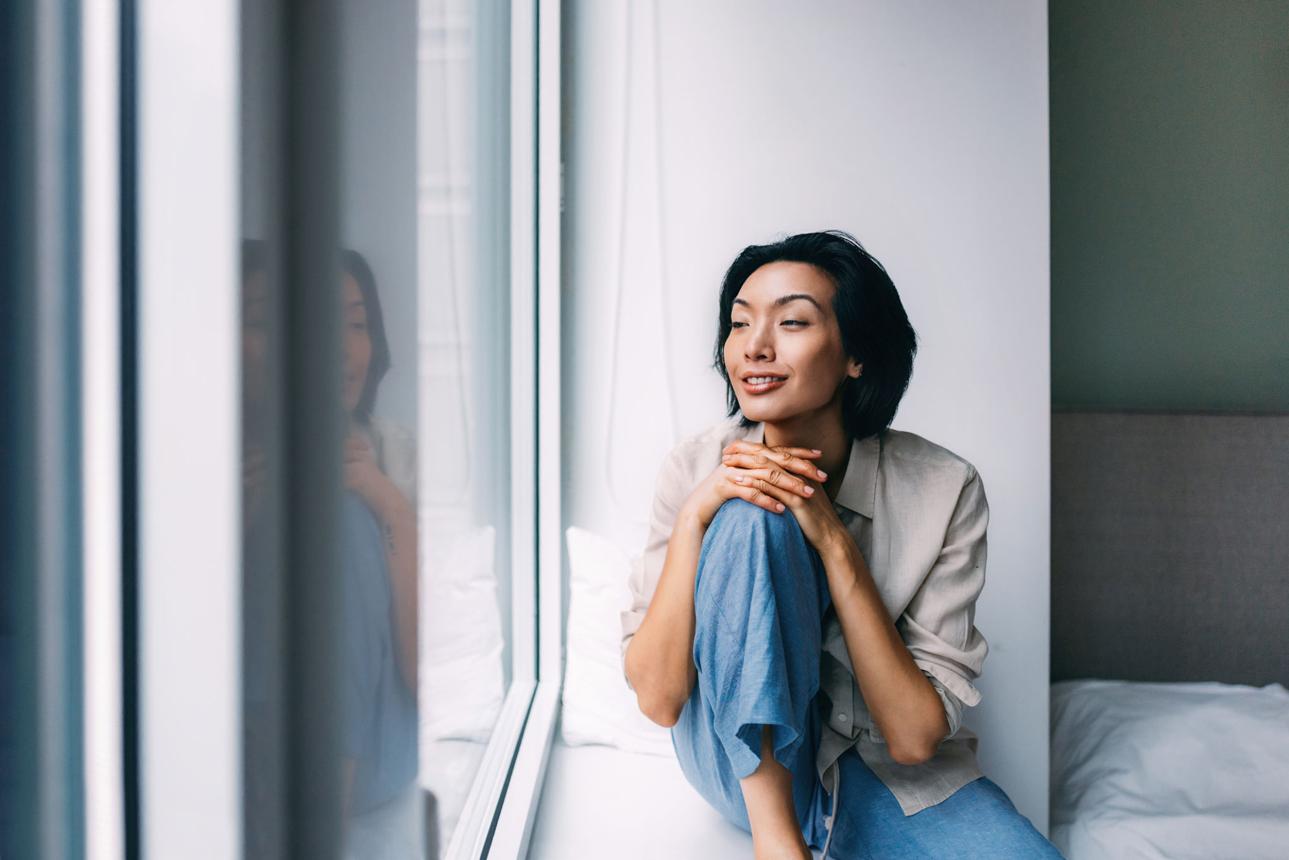
The Skill We Forgot: How to Do Nothing
Somewhere along the way, rest stopped being a natural rhythm and became something we schedule, optimize, and occasionally feel guilty about. We track sleep like a performance metric, turn meditation into a streak, and call a quiet evening “unproductive” if it doesn’t yield a visible result.
Yet the body keeps a different ledger.
Long after a difficult conversation fades from memory, your shoulders may still carry its weight. Weeks after a stressful deadline, your sleep may remain shallow. The mind moves on quickly. The body does not. It remembers in subtler, slower ways.
In that sense, rest is not indulgence. It is repair. And increasingly, it looks like a skill we have forgotten how to practice.
Stillness, Before It Became a Trend
The idea of “doing nothing” is not new. It only feels radical because modern life has crowded it out.
In ancient China, the philosophy of wu wei—often translated as “effortless action”—encouraged alignment with natural rhythms rather than constant striving. In Japan, the concept of ma honors the space between things: the pause in music, the silence in conversation, the emptiness that gives form its meaning.
Across Mediterranean cultures, the afternoon siesta was never laziness; it was adaptation, a way of working with the body rather than against it. Even monastic traditions in Europe built entire days around intervals of quiet contemplation, recognizing that attention needs intervals of release.
None of these practices framed stillness as a reward for productivity. They treated it as a condition for being fully human.
The Body Keeps the Score—Literally
Modern science has begun to articulate what these traditions intuited.
When we experience stress—whether acute or chronic—the body activates a cascade of physiological responses. Heart rate rises, muscles tighten, cortisol surges. Ideally, once the stressor passes, the system returns to baseline. But when stress is constant or unprocessed, the body doesn’t fully reset.
Instead, it adapts.
Muscles hold tension as a default setting. Breathing becomes shallow. The nervous system hovers in a low-grade state of alertness. Over time, this can manifest as fatigue, irritability, digestive issues, or a vague sense of being “off” without a clear cause.
Psychologists refer to this as somatic memory—the way emotional experiences are encoded in the body. Neuroscience adds another layer: the brain’s limbic system, which processes emotion, is closely linked to autonomic functions like heart rate and respiration. What we feel is not separate from how the body operates. It is embedded within it.
Research on the parasympathetic nervous system—the branch responsible for “rest and digest”—shows that intentional stillness can help shift the body out of stress mode. Slow breathing, quiet reflection, and even brief periods of non-doing have measurable effects: reduced cortisol levels, improved heart rate variability, and better emotional regulation.
In other words, stillness is not passive. It is biologically active.
Why We Resist It
If stillness is so beneficial, why does it feel so difficult?
Part of the answer lies in conditioning. We are taught, subtly and consistently, that value is tied to output. Idleness becomes suspect. Silence feels like a gap to be filled.
There is also a more intimate reason: when we slow down, we notice more. Unprocessed emotions—grief, frustration, uncertainty—have space to surface. Movement and distraction keep them at bay. Stillness invites them in.
This is why doing nothing can feel surprisingly uncomfortable. It asks us to sit not just with quiet, but with ourselves.
The Quiet Benefits of Doing Less
Despite that discomfort, the rewards of reclaiming stillness are both immediate and cumulative.
Clarity emerges. When the mind is no longer bombarded with inputs, it begins to organize itself. Thoughts that felt tangled start to settle.
The body softens. Muscle tension decreases. Breathing deepens. The nervous system shifts toward balance.
Emotional processing improves. Instead of bypassing difficult feelings, stillness allows them to move through the system, reducing their lingering effects.
Creativity returns. Some of the most original ideas arise not during effort, but in moments of pause—while walking, resting, or staring out a window.
These are not dramatic transformations. They are subtle recalibrations. But over time, they change how we experience daily life.
Relearning Stillness: Small Ways Back In
You don’t need a retreat or a rigid routine to begin. Stillness can be woven into the margins of ordinary days.
1. Create a pocket of quiet, not a performance.
Set aside five to ten minutes without a goal. No app, no timer-driven objective. Sit, stand, or lie down. Let the moment be unstructured.
2. Let your body lead.
Notice where tension lives—jaw, shoulders, chest. Instead of trying to “fix” it, bring gentle attention there. Often, awareness alone begins the release.
3. Breathe as if it matters, because it does.
Slow, deliberate breathing—especially longer exhales—signals safety to the nervous system. It’s one of the simplest ways to shift internal state.
4. Replace one scroll with a pause.
The impulse to reach for your phone is often a cue for a micro-break. Experiment with not filling that space. Even 60 seconds of looking out a window can reset your attention.
5. End the day with less input.
Before sleep, create a small buffer without screens or stimulation. Let the body transition gradually, rather than abruptly.
The Body Remembers—But It Also Responds
If the body stores our experiences, it also responds to how we care for it in the present. Stillness is one of the most direct ways to communicate safety, to signal that the moment does not require defense or urgency.
Relearning how to do nothing is not about withdrawal from life. It is about re-entering it with more presence, less residue, and a nervous system that isn’t perpetually braced.
Rest, in this light, is not the opposite of productivity. It is the foundation that makes a sustainable life possible.
And perhaps the quiet truth is this: the body has been asking for it all along.
Leave a Reply