An Ancient Practice, A Modern Revival
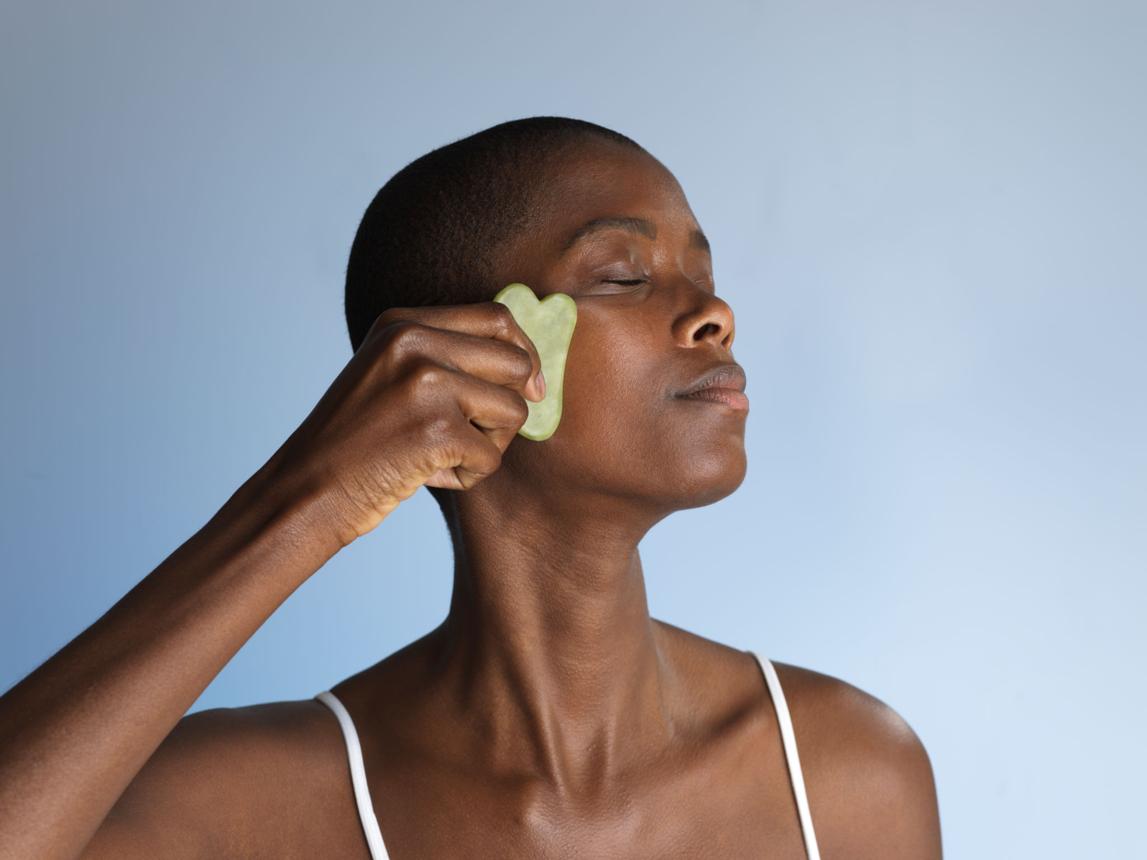
Once a quiet cornerstone of traditional East Asian healing, gua sha has found its way into contemporary skincare with remarkable ease. What began as a body treatment rooted in traditional Chinese medicine—designed to stimulate circulation and release stagnation—has evolved into a refined facial ritual associated with sculpting, lymphatic drainage, and a subtle, natural glow.
Its appeal lies in its simplicity: a smooth-edged tool, a few minutes of time, and the promise of visible results. Yet, as with many practices adapted for modern use, its effectiveness depends not just on consistency, but on technique. When misunderstood, gua sha can become less beneficial—and occasionally counterproductive.
Understanding what not to do is, in this case, as important as mastering the method itself.
Mistake 1: Using Too Much Pressure
One of the most common misconceptions about gua sha is that firmer pressure yields better results. This belief likely stems from its traditional use on the body, where more vigorous scraping was sometimes employed.
Facial skin, however, requires a markedly different approach.
Applying excessive pressure can:
- Irritate delicate tissues
- Cause unnecessary redness or broken capillaries
- Disrupt rather than support lymphatic flow
Effective facial gua sha is defined by light, controlled movements. The tool should glide—not drag—across the skin, encouraging circulation without force. A gentle touch is not only sufficient; it is essential.
Mistake 2: Skipping Proper Preparation
Gua sha is not designed to be performed on dry skin. Yet this step is often overlooked in the interest of speed.
Without a suitable base—typically a facial oil or serum—the tool creates friction. This can lead to pulling, discomfort, and long-term strain on the skin.
Preparation serves multiple purposes:
- It allows the tool to move smoothly
- It enhances absorption of the product used
- It protects the skin barrier from unnecessary stress
Choosing a lightweight oil and taking a moment to warm it between the hands ensures that the skin is adequately conditioned before the first stroke begins.
Mistake 3: Ignoring Direction and Technique
Gua sha is not a random sequence of movements. Its effectiveness is closely tied to direction—specifically, how strokes align with the natural pathways of lymphatic drainage.
Common errors include:
- Moving the tool back and forth without intention
- Using downward strokes that counteract lifting effects
- Neglecting the neck, where lymphatic flow begins
A more considered approach involves:
- Starting at the neck to encourage drainage
- Using upward and outward strokes along the face
- Maintaining consistent angles to avoid uneven pressure
This structure transforms gua sha from a simple massage into a targeted technique, supporting both sculpting and detoxification.
Why These Mistakes Matter
At its best, gua sha offers subtle yet meaningful benefits—improved circulation, reduced puffiness, and a more refined facial contour. These results, however, are cumulative and dependent on proper execution.
When performed incorrectly, the practice may:
- Deliver minimal visible improvement
- Cause temporary irritation
- Undermine the consistency needed for long-term results
In contrast, a well-executed routine works in harmony with the skin, enhancing its natural processes rather than forcing change.
The Enduring Appeal of Gua Sha
Despite its modern popularity, gua sha remains rooted in principles that have endured for centuries: balance, rhythm, and respect for the body’s natural systems.
Its relevance today reflects a broader shift in beauty—away from aggressive intervention and toward techniques that support the skin over time. It offers a form of care that is both effective and restorative, aligning with the growing preference for rituals that combine function with experience.
In this sense, gua sha is not simply a trend, but a continuation of a longstanding philosophy.
Clear Takeaways for Today
- Gentle pressure is key: More force does not equal better results
- Preparation matters: Always use a facial oil or serum to reduce friction
- Technique defines effectiveness: Follow structured, upward movements aligned with lymphatic flow
- Consistency over intensity: Regular, mindful practice yields the best outcomes
- Less is more: A few well-executed minutes are more effective than rushed or excessive sessions
A Practice Refined by Attention
Gua sha, when approached with care, becomes more than a technique. It is a moment of pause, a form of touch that reconnects you with the rhythm of your own skin.
Avoiding these common mistakes allows the practice to reveal its true value—not dramatic transformation, but steady refinement. And in that refinement lies its quiet, enduring appeal.
Leave a Reply