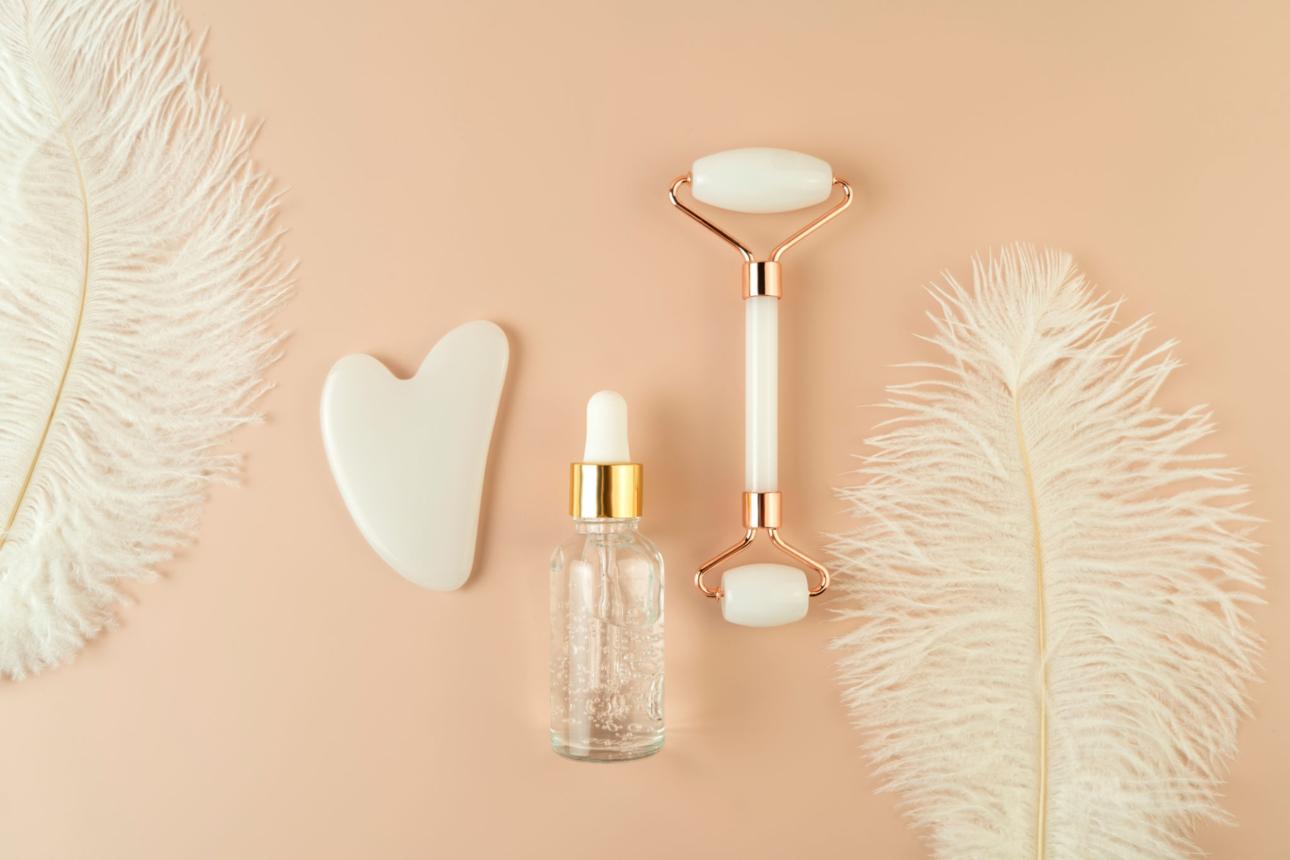
The Slip That Transforms a Ritual
Gua sha, in its modern facial form, may appear deceptively simple: a sculpted stone, a series of measured strokes, and a few quiet minutes before the mirror. Yet historically, this technique—rooted in traditional Chinese medicine—was never intended to be performed on bare skin. Oils were always part of the process, acting not merely as a lubricant, but as a medium through which touch could move fluidly and effectively.
In ancient practices, botanical oils were chosen for their compatibility with the body, often infused with herbs to enhance their properties. Today, while formulations have become more refined, the principle remains unchanged. The right oil does not simply allow the tool to glide; it elevates the entire experience, supporting both the skin and the ritual itself.
Why Facial Oils Matter in Gua Sha
At its most practical level, oil reduces friction. Without it, the gua sha tool drags across the skin, creating tension rather than release. But beyond this, oils serve several essential functions:
- They create a smooth, continuous glide for controlled movement
- They support the skin barrier, preventing irritation
- They enhance absorption through massage
- They contribute their own set of nutrients and benefits
In essence, the oil is not an accessory. It is a foundational element of the practice.
Choosing the Right Oil: A Matter of Balance
Not all facial oils are equally suited to gua sha. The ideal formula strikes a balance between slip and absorption—light enough to move effortlessly, yet substantial enough to nourish.
1. Jojoba Oil: The Universal Base
Often considered the closest match to the skin’s natural sebum, jojoba oil is remarkably versatile. It offers a lightweight glide without clogging pores, making it suitable for most skin types.
Why it works with gua sha:
- Absorbs gradually, maintaining slip throughout the massage
- Supports hydration without heaviness
- Ideal for beginners seeking consistency and ease
2. Rosehip Oil: For Renewal and Radiance
Rich in essential fatty acids and naturally occurring vitamin A derivatives, rosehip oil is often associated with skin renewal.
Why it works with gua sha:
- Enhances the appearance of tone and texture over time
- Provides a slightly richer glide, ideal for evening rituals
- Supports a more luminous, refined finish
3. Squalane: The Modern Minimalist
Derived from olives or sugarcane, squalane is prized for its stability and lightweight feel. It is virtually weightless on the skin, yet highly effective at maintaining moisture.
Why it works with gua sha:
- Creates a smooth, non-greasy surface
- Suitable for sensitive or reactive skin
- Absorbs cleanly, leaving minimal residue
4. Argan Oil: Nourishment with Structure
Argan oil offers a slightly richer texture, making it particularly beneficial for drier skin types.
Why it works with gua sha:
- Provides lasting slip for extended massage
- Delivers antioxidants that support skin resilience
- Ideal for slower, more indulgent routines
5. Camellia Oil: A Quiet Classic
Long used in East Asian beauty traditions, camellia oil is both lightweight and deeply conditioning.
Why it works with gua sha:
- Balances hydration and absorption
- Leaves the skin soft without heaviness
- Aligns seamlessly with the origins of the practice
Technique: Letting the Oil Guide the Movement
Once the right oil is chosen, application becomes intuitive.
Begin with a few drops, warmed between the palms. Press gently into the skin rather than rubbing, allowing it to settle. The gua sha tool should then move effortlessly—upward and outward—without resistance.
If the tool begins to drag, it is a signal to pause and reapply a small amount of oil. The goal is continuity, not force.
This interplay between oil and movement defines the quality of the ritual.
Enduring Relevance: A Return to Oil-Based Care
In recent years, facial oils have re-emerged as essential components of skincare, particularly as routines shift away from over-stripping and toward barrier support.
Their pairing with gua sha reflects a broader movement toward slower, more intentional practices—where touch, texture, and time are valued alongside results.
This approach does not reject modern innovation, but complements it. Oils provide a foundation, allowing more active formulations to perform without overwhelming the skin.
Clear Takeaways for Today
- Oil is essential for gua sha: It ensures smooth movement and protects the skin
- Choose based on skin type: Lightweight for balance, richer for dryness
- Less is more: A few drops, properly applied, are sufficient
- Reapply as needed: Maintain glide throughout the massage
- Consistency defines results: Regular, mindful practice yields the best outcomes
A Ritual Refined by Texture
The effectiveness of gua sha lies not only in technique, but in the medium through which it is performed. A well-chosen facial oil transforms each stroke, allowing movement to feel seamless, controlled, and restorative.
In this quiet partnership between tool and oil, skincare becomes less about effort and more about flow. And in that flow, the skin responds—not dramatically, but steadily, with a clarity and softness that feels both immediate and enduring.
Leave a Reply