The sound arrived first—waves folding gently against stone.
Standing atop the old fort walls at dawn, I watched the Indian Ocean move in slow, rhythmic breaths beneath the pale sky. The air carried the scent of salt and frangipani drifting from nearby gardens, while somewhere below, a bicycle bell rang softly along the cobbled street.
The city of Galle was still waking.
A tea vendor arranged cups on a wooden tray. A fisherman walked along the ramparts with quiet familiarity. The streets, still empty of the day’s visitors, seemed to whisper their stories through weathered walls and open windows.
In that quiet moment, it felt as though time itself had paused—just long enough for a traveler to notice.
A City Built Between Worlds
Galle sits along Sri Lanka’s southern coast, where centuries of maritime trade once brought merchants, sailors, and explorers from across the Indian Ocean.
The fort that defines the city today was first constructed by the Portuguese in the 16th century and later expanded by the Dutch into the elegant grid of streets that remains remarkably intact. Walking through the old town feels like stepping through layers of history gently pressed together.
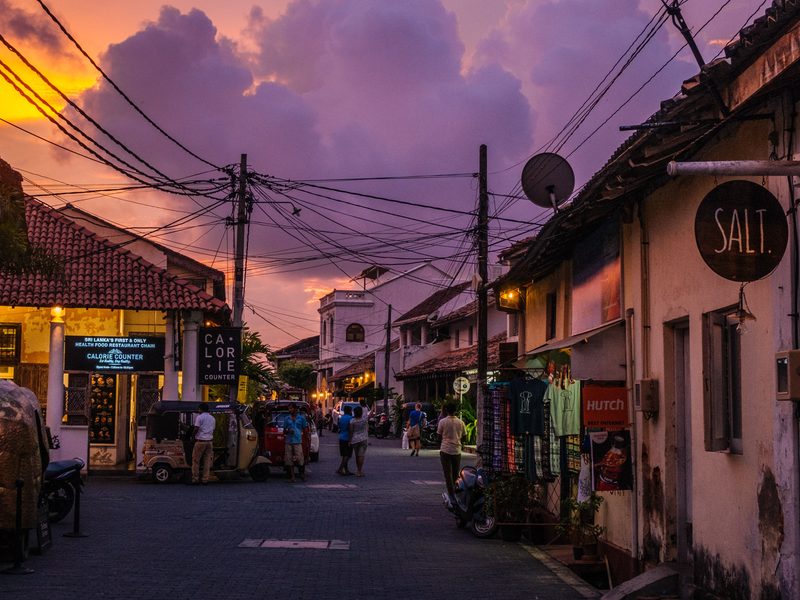
Colonial-era villas with wide verandas stand beside modest family homes. Bougainvillea spills over whitewashed walls. Wooden shutters open onto narrow lanes where the afternoon light settles softly.
Yet what makes Galle remarkable is not its architecture alone.
It is the way the city breathes.
Unlike many historic towns shaped by tourism, Galle retains a sense of lived-in calm. Children walk home from school along the ramparts. Tailors sit at open doorways repairing garments. Shopkeepers greet neighbors with quiet familiarity.
Life continues here not as performance, but as rhythm.
The Art of Moving Slowly
Travel often encourages motion—new places, new experiences, new discoveries.
But Galle invites something else entirely.
The streets inside the fort are best explored without a map or agenda. Wandering through them feels less like sightseeing and more like listening.
One afternoon, I found myself drawn into a small courtyard café hidden behind a carved wooden door. The scent of cinnamon tea drifted through the open windows while a ceiling fan turned slowly above a handful of wooden tables.
The pace of the afternoon was unhurried.
Outside, the streets remained quiet except for the occasional footsteps of someone passing by. A dog slept beneath the shade of a mango tree. Somewhere in the distance, church bells rang once and then faded into the ocean wind.
There was a sense that nothing needed to happen immediately.
In a world that often rewards urgency, this stillness felt almost luxurious.
Cultural Notes from a Coastal Town
Galle’s culture reflects Sri Lanka’s layered history—a blend of Sinhalese tradition, colonial influence, and the enduring presence of the sea.
Food here mirrors that diversity.
One evening, I sat at a small restaurant overlooking the ramparts where the chef prepared a classic Sri Lankan curry. The table filled gradually with dishes: fragrant rice, spiced lentils, coconut sambol bright with chili and lime, and tender fish cooked with tamarind.
The flavors were vivid yet balanced—warm spices softened by coconut milk and fresh herbs.
Cinnamon, one of Sri Lanka’s most celebrated exports, appears frequently in both savory and sweet dishes. Its subtle warmth lingers gently rather than overpowering the palate.
Another morning began with hoppers, bowl-shaped rice pancakes with crisp edges and soft centers, served with egg and spicy sambal. Eaten slowly with strong Ceylon tea, the meal carried a quiet satisfaction.
These foods speak of place as clearly as the architecture.
They reflect a culture shaped by land, sea, and centuries of exchange.
The Quiet Wisdom of Old Streets
As the days passed, the charm of Galle revealed itself not through grand attractions but through small, recurring moments.
Watching fishermen cast their lines into the surf at sunset. Listening to the rustle of palm leaves along the fort walls. Walking along lantern-lit streets after dinner while the ocean breeze cooled the air.
The city seemed to hold a kind of quiet wisdom.
Its streets had witnessed empires rise and fade, storms reshape the coastline, and generations of lives unfold within the same walls. Yet the pace of daily life remained gentle.
In many ways, Galle reminded me that longevity often belongs to places—and people—who understand how to move slowly.
A Lesson Carried Home
On my final morning, I returned to the fort walls where the journey had begun.
The ocean moved with the same steady rhythm. A fisherman stood where another had stood days earlier. The city was waking again, just as quietly as before.
Travel often promises transformation through distance.
But standing there, I realized that the most meaningful shifts are rarely dramatic. Instead, they arrive subtly—through moments when a place invites us to pause and reconsider how we move through our own lives.
Galle does not rush.
Its streets whisper rather than shout. Its rhythms unfold gradually, like waves meeting the shore.
Leaving the city, I carried with me a quiet understanding: that stillness is not the absence of movement, but the presence of attention.
And sometimes, the most valuable journeys are the ones that remind us how to slow down enough to listen.

Leave a Reply