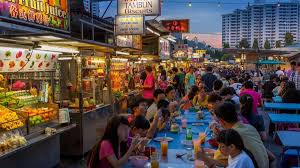
The first sound was the soft scrape of a metal spatula against a hot wok.
It was barely dawn in George Town, yet the street was already waking. A vendor lifted the lid from a steaming pot, releasing a cloud of fragrant vapor into the morning air—garlic, soy, and something faintly smoky that lingered long enough to draw passing footsteps closer.
Motorbikes hummed quietly along the narrow road. A row of plastic stools appeared beside a stall as if placed there by habit rather than design. Somewhere behind me, a kettle whistled gently.
The sky was still pale blue, caught between night and day.
And in that quiet hour before the crowds arrived, Penang revealed itself through the language it speaks best: food.
A Morning That Begins with the Streets
Penang’s culinary reputation is often discussed in the language of accolades—one of the world’s great food cities, a place where cultures converge through taste.
But the soul of Penang’s cuisine does not live in restaurants.
It lives in the streets.
Before sunrise, hawker stalls begin to open one by one, each with its own rhythm and quiet routine. Some have stood in the same corner for decades, run by families who inherited recipes as naturally as their surnames.
The pace is deliberate. A cook arranges noodles into bowls. Another slices fresh herbs with practiced precision. A third stirs broth that has been simmering slowly since the previous evening.
Watching them work feels less like witnessing commerce and more like observing a ritual repeated daily.
There is comfort in its consistency.
The Taste of a City’s History
Penang’s food culture reflects its layered past.
Chinese traders, Malay fishermen, Indian spice merchants, and Peranakan families all left their imprint on the island’s kitchens. Over generations, these influences merged into a culinary identity that feels both diverse and deeply rooted.
At one stall, I ordered a bowl of char kway teow, its wide rice noodles stir-fried over fierce heat with prawns, eggs, and Chinese sausage. The wok flame leapt briefly as the cook tossed the ingredients together, infusing the dish with a smoky aroma known locally as wok hei—the “breath of the wok.”
A few steps away, another vendor prepared nasi lemak, fragrant rice steamed in coconut milk and served with sambal, anchovies, peanuts, and slices of cucumber.
Each dish carried echoes of the communities that shaped it.
In Penang, breakfast is not merely nourishment; it is history served on a plate.
Eating with the Rhythm of the Morning
What struck me most about eating at sunrise in Penang was not the food itself, but the atmosphere surrounding it.
There was no rush.
Office workers stopped briefly for breakfast before beginning the day. Elderly residents sat with cups of kopi—thick, dark local coffee sweetened with condensed milk—reading newspapers while the city slowly gathered momentum.
Conversations unfolded in multiple languages at once: Hokkien, Malay, Tamil, English. Yet somehow the soundscape remained gentle rather than chaotic.
Meals were eaten simply.
A bowl of noodles, a small cup of tea, perhaps a piece of toast spread with kaya, the coconut jam beloved across Malaysia. No elaborate presentation, no unnecessary decoration.
Just food, served warm and honest.
In a world often obsessed with spectacle, this simplicity felt quietly refreshing.
Cultural Notes from the Hawker Table
Penang’s street food culture is inseparable from its hawker tradition.
These open-air food stalls emerged from migrant communities who brought recipes from their homelands and adapted them using local ingredients. Over time, hawker centers became informal gathering places where people from every background could sit side by side at shared tables.
Many stalls specialize in a single dish perfected over decades.
A bowl of penang laksa, for example, balances tamarind sourness with fish broth, herbs, and a hint of sweetness from pineapple. Its flavor profile reflects the island’s love for bold contrasts.
Then there is roti canai, the flaky flatbread introduced by Indian Muslim traders. It arrives warm, torn into pieces and dipped into curry that carries both spice and comfort.
These foods are humble, yet they reveal something profound about Penang’s identity.
Here, culinary heritage is preserved not in museums, but in everyday meals.
The Quiet Lessons of Eating Local
Travel often encourages us to seek the extraordinary—the hidden beach, the breathtaking view, the once-in-a-lifetime experience.
Yet in Penang, the most meaningful moments arrived through something far simpler: breakfast on a plastic stool beside strangers who were simply beginning their day.
Watching the cooks move through their morning routines, I began to notice a rhythm.
Preparation before sunrise. The first wave of customers arriving slowly. The brief quiet between orders when the vendor wipes down the counter and pours himself a cup of tea.
There was dignity in these small gestures.
Food, after all, is one of the most human forms of connection. It transcends language, culture, and geography with quiet ease.
To eat like a local is to step briefly into that shared rhythm.
A Lesson in Presence
As the sun rose higher above George Town’s pastel-colored buildings, the streets began to fill with movement.
More stalls opened. Tourists appeared with cameras. The gentle stillness of dawn slowly gave way to the busy pulse of the city.
Yet the memory that stayed with me was not the bustle.
It was that first quiet hour.
Sitting on a simple stool, holding a bowl of noodles warm in my hands, watching a vendor cook as he had done every morning for decades.
Travel often promises discovery in distant landscapes.
But sometimes, the most meaningful discoveries happen at street level—between the steam rising from a pot and the first sip of coffee at sunrise.
In those moments, we remember something easily forgotten in the rush of daily life: that presence, like good food, requires only time and attention.
And when we slow down enough to taste it fully, even an ordinary morning can feel quietly transformative.
Leave a Reply