The first thing I noticed was the rhythm of my footsteps.
Gravel underfoot, steady and unhurried, echoing through a narrow path lined with trees that seemed older than memory. The air carried the faint scent of damp earth and wild herbs, the kind that lingers softly without demanding attention. There was no destination marked on a map, no route to optimize—only the quiet agreement between body and ground.
I had come away for a weekend, intending to rest. I did not expect to relearn how to move.
For years, movement had become something structured, contained within designated hours and polished studios. It lived inside routines—measured breaths, mirrored poses, curated playlists. There is comfort in that discipline, of course. But somewhere along the way, movement had also become something to perform, something to perfect.
This journey offered something quieter.
In a small town that seemed untouched by urgency, I found myself walking everywhere. Not out of necessity, but because there was no reason not to. Streets unfolded slowly, revealing details that would have been invisible at speed: a bicycle leaning against a sun-faded wall, laundry shifting gently in the breeze, a dog sleeping in the doorway of a shop that may or may not have been open.
Without intention, my body began to soften into a different rhythm.
I noticed how walking, when unhurried, becomes less about reaching and more about sensing. The body listens—to the incline of the path, to the temperature of the air, to the subtle shifts of balance. It is a conversation rather than a command. And in that conversation, something within me quieted.
There was no need to track steps, to measure progress, to achieve anything beyond presence.
One morning, I followed the sound of voices into a local market. It was already alive with movement—the kind that doesn’t call attention to itself. Vendors arranging vegetables with practiced ease, hands moving with an economy shaped by years rather than instruction. Customers drifting from stall to stall, exchanging greetings that felt more like rituals than transactions.
I bought a simple breakfast wrapped in paper—flatbread still warm, filled with herbs, a hint of spice, and something citrusy that brightened the entire bite. I ate it standing by the edge of the market, watching the choreography of everyday life.
Here, movement wasn’t separated from living. It was woven into it.
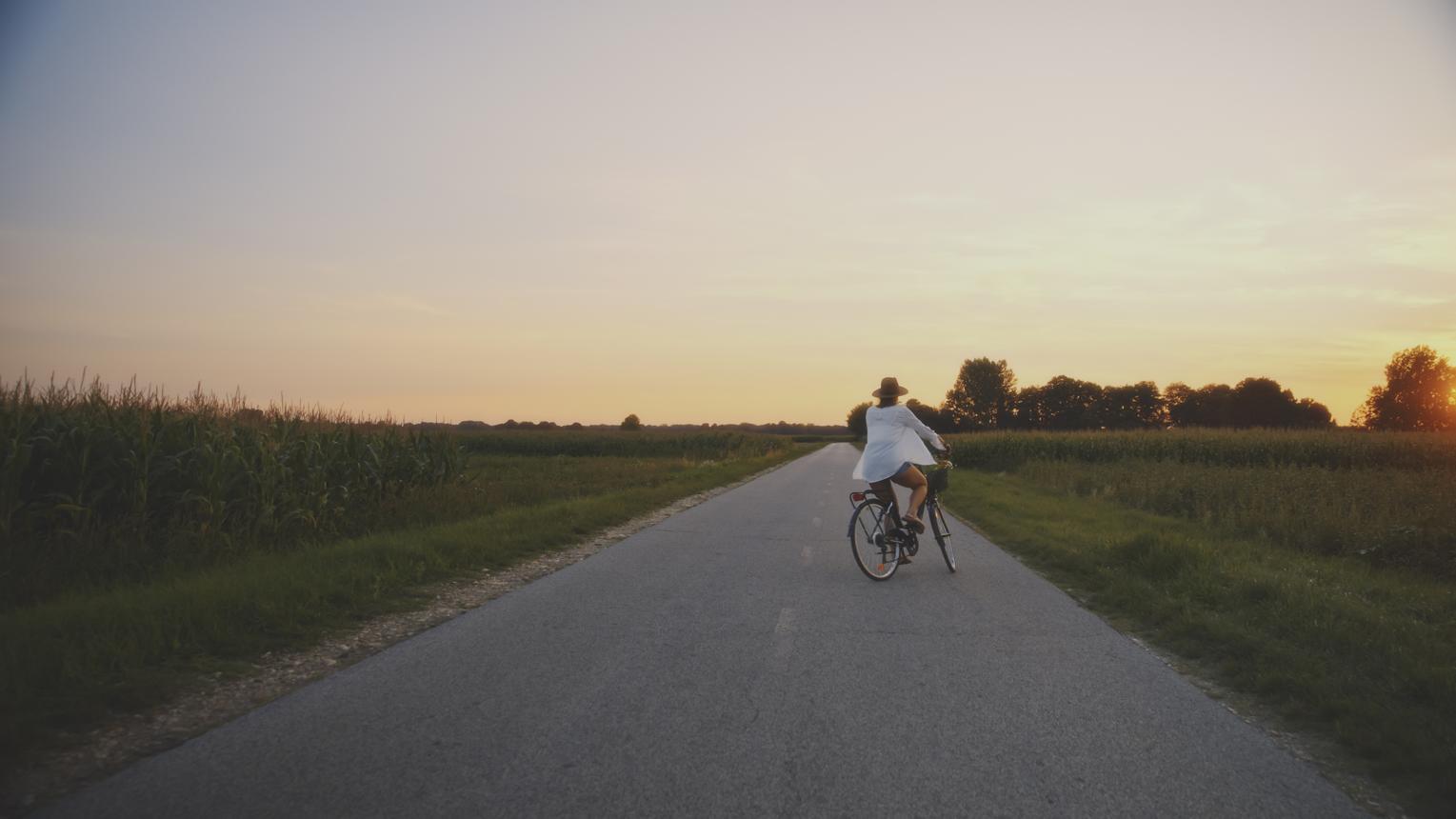
An elderly man cycled past with a basket of produce balanced effortlessly behind him. A child ran barefoot across the square, chasing something invisible and important. A woman stirred a pot with slow, deliberate motions, pausing occasionally to adjust the flame, as if time itself were an ingredient to be handled with care.
It struck me then—how much of modern wellness has been distilled into practices that remove us from the very context that gives movement meaning.
We stretch, but we do not reach for anything real.
We walk on machines, but we do not arrive anywhere.
We breathe deeply, but often forget to notice what fills the air.
In this place, movement was not something to be scheduled. It was something to be lived.
Later that afternoon, I wandered toward the edge of town, where the road dissolved into sand and the sea opened quietly ahead. I slipped off my shoes without thinking, letting the coolness of the shore meet my skin. The water moved in a gentle, repetitive pattern—advancing, retreating, never hurried.
I walked along the shoreline, not counting distance, not marking time.
There is a particular kind of awareness that emerges when the body is allowed to move without purpose. Muscles engage and release in their own intelligence. Breathing settles into a rhythm that feels less instructed and more remembered. Even thought becomes less insistent, as if it, too, is carried by the tide.
I realized how rarely I had allowed movement to exist without expectation.
Not as exercise.
Not as discipline.
But simply as participation in the world.
Travel, in its quietest form, has a way of returning us to these forgotten truths.
It reminds us that wellness is not always found in structured spaces or perfected routines, but in the subtle ways we inhabit our bodies as we move through unfamiliar places. It is in the decision to walk instead of rush, to carry instead of delegate, to notice instead of record.
When I returned, there was no dramatic transformation to announce. No new practice to adopt, no routine to prescribe.
Only a gentle shift.
I found myself choosing stairs over elevators, not out of obligation, but out of curiosity. Walking without headphones, allowing the world to fill the silence. Cooking slowly, aware of the small movements that bring a meal into being. These were not grand gestures, but they felt quietly significant.
Because movement, I understood, is not something we need to add to our lives.
It is something we need to remember within them.
And sometimes, it takes leaving—to another place, another rhythm—to come back to that understanding with clarity.
A body in motion is not always seeking progress.
Sometimes, it is simply seeking presence.
Leave a Reply