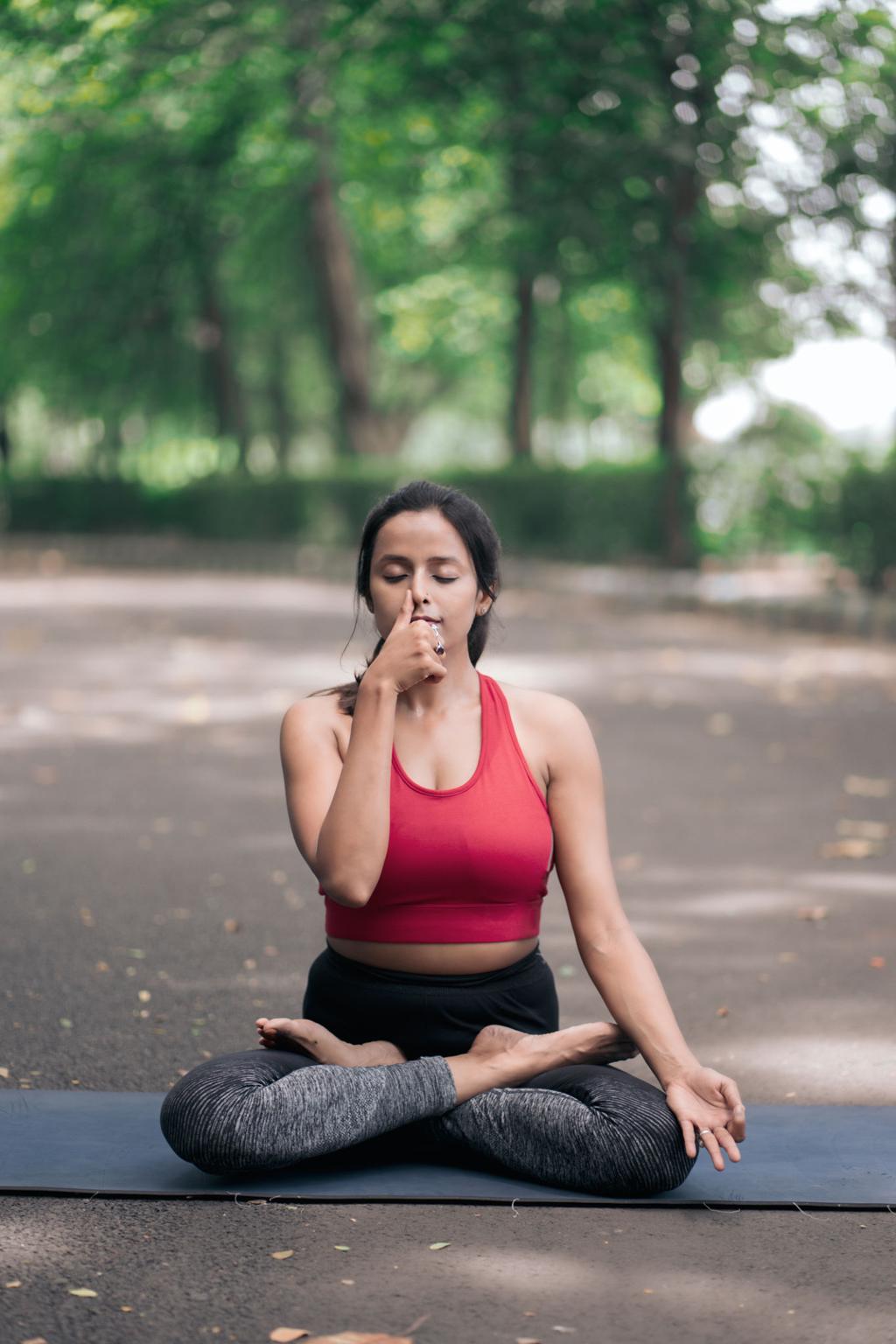
Rest Isn’t the Absence of Breath — It’s What Happens Between It
We tend to think of breathing as continuous.
Inhale, exhale, repeat. A background process so constant that we rarely notice it unless something feels off. And when we think about calming the body, we often focus on slowing the breath, deepening it, making it more regular.
But there is a quieter moment within that cycle that often goes unnoticed.
The pause.
The brief space after an exhale, before the next inhale begins. A moment where nothing is being taken in, and nothing is being released.
In many ways, this is the closest the body comes to stillness.
And it may be one of the most direct pathways into rest we’ve forgotten how to use.
When Breath Was More Than Automatic
Long before breath was studied in laboratories, it was observed in practice.
In yogic traditions, breath retention—known as kumbhaka—was considered a central element of pranayama. It wasn’t treated as a performance or a challenge, but as a way of refining awareness and regulating internal states.
There were different forms.
Holding the breath after inhalation.
Pausing after exhalation.
Allowing the rhythm to extend naturally.
These practices were never isolated.
They were part of a larger system that included movement, stillness, and attention. The goal was not control for its own sake, but alignment.
Across other traditions, similar pauses appeared.
In meditation practices, the space between breaths was often where attention settled most deeply. In martial disciplines, breath control was used to stabilize the body under pressure.
Even in everyday life, before constant stimulation, there were more natural pauses—moments where breath slowed without intention.
These were not labeled as techniques.
They were simply part of how the body moved through time.
What Happens When We Pause the Breath
From a modern scientific perspective, breath retention affects the body in several ways.
When we hold the breath briefly, carbon dioxide levels in the blood begin to rise. This may sound counterintuitive, but within a safe range, it can actually improve the body’s ability to use oxygen more efficiently.
At the same time, the nervous system responds.
Short, gentle breath holds—especially after exhalation—can stimulate the parasympathetic system. Heart rate may slow. The body begins to shift toward a state of calm.
There is also an effect on attention.
Holding the breath requires presence. It anchors awareness in the body, reducing the tendency for the mind to drift.
Recent research has explored how breath patterns influence brain activity. Certain breathing techniques, including controlled pauses, have been linked to changes in neural oscillations—patterns that affect focus, emotional regulation, and perception.
The result is not dramatic.
But it is immediate.
A slight shift in how the body feels.
A softening of internal noise.
A moment where the system recalibrates.
Why We Avoid the Pause
If breath retention has these effects, why does it feel unfamiliar?
Partly, it’s instinct.
The body is designed to breathe continuously. Holding the breath, even briefly, can trigger a sense of urgency if approached too forcefully.
There’s also a cultural tendency to prioritize movement.
We’re comfortable doing, less comfortable pausing. Even in rest, we often prefer gentle activity—music, scrolling, conversation—over true stillness.
The pause in the breath asks for something different.
Not effort, but allowance.
And that can feel unfamiliar at first.
The Quiet Effects of Breath Retention
When practiced gently and without force, breath retention introduces a different quality of rest.
Attention becomes more focused.
The mind has a clear point of reference.
The body releases tension.
Without needing to consciously relax.
The nervous system shifts.
From subtle activation toward regulation.
Time feels slightly expanded.
Moments are experienced more fully.
These effects are not sustained indefinitely.
They arise within the practice, then carry forward briefly.
But over time, they can influence the baseline.
Reintroducing the Pause Safely
Breath retention is not about pushing limits.
It’s about noticing what is already there, and extending it gently.
1. Start with the natural pause.
After an exhale, notice the brief moment before the next inhale. Don’t change it. Just observe.
2. Extend it slightly.
If it feels comfortable, allow the pause to last a second or two longer. No strain.
3. Keep the breath soft.
Avoid forcing deep inhalations or long holds. Ease matters more than duration.
4. Practice in stillness.
Sit or lie down. Let the body be supported.
5. Stop before discomfort.
The goal is regulation, not endurance.
A Different Way Into Rest
We often look for complex methods to calm the mind.
Structured practices, extended sessions, detailed techniques.
But sometimes, the most direct path is also the simplest.
A breath.
An exhale.
A pause.
In that pause, the body is not taking in, not releasing, not reacting.
It is simply there.
And in that moment, something shifts.
Not because we’ve done more.
But because we’ve allowed less.
And in that space, rest begins—not as something we create, but as something we remember.
Leave a Reply