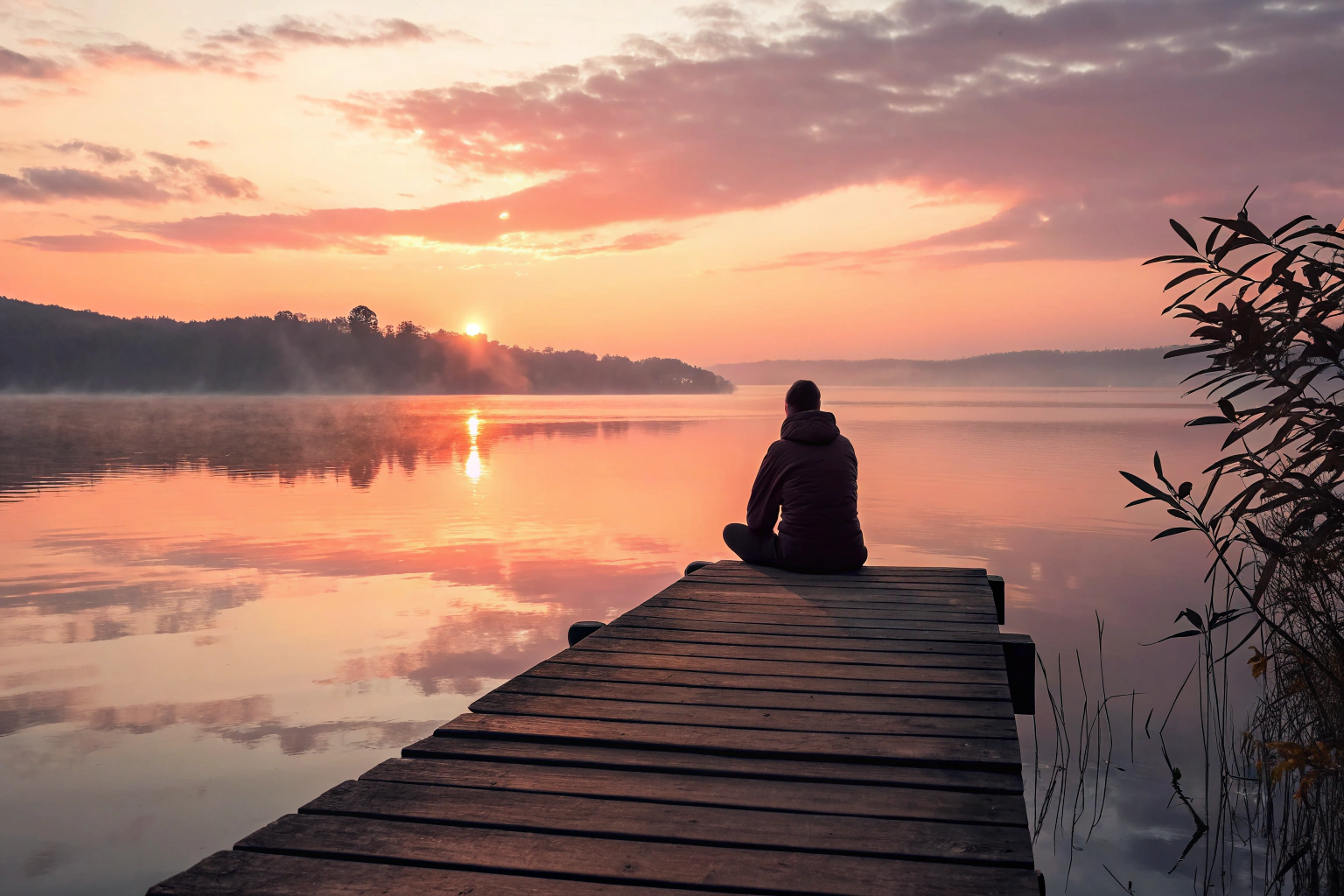
There is a particular kind of silence that feels almost unfamiliar today.
It might arrive early in the morning before the city wakes, when the light is pale and the air carries the faint scent of rain from the night before. A kettle hums softly in the kitchen. Outside, a few birds test the first notes of the day. For a brief moment, the world feels spacious.
No notifications. No conversations. No expectations.
Just you and the quiet.
Not long ago, solitude was something many people tried to avoid — an empty space to be filled with company, entertainment, or distraction. But lately, something curious is happening. In a world overflowing with messages, meetings, and constant connection, solitude has begun to feel rare. And like anything rare, it is becoming deeply valuable.
In many ways, solitude has quietly become a form of modern luxury.
A World That Rarely Stops Talking
Life today hums with a constant layer of noise.
Phones vibrate with new messages. Work emails arrive at all hours. Social platforms provide endless streams of conversation, commentary, and updates. Even moments once reserved for waiting — standing in line, sitting on a train, walking down the street — are now filled with glowing screens.
Connection, once limited by distance and time, is now immediate and continuous.
And yet, many people are beginning to feel an unexpected side effect of this hyperconnected world: a subtle exhaustion from never being alone with their own thoughts.
Solitude used to arrive naturally. Long commutes without Wi-Fi, quiet afternoons at home, evenings spent reading or reflecting. Today, these moments often disappear beneath layers of digital activity.
But the human mind still craves pauses.
Without them, something important begins to fade: the space where ideas form, emotions settle, and clarity slowly emerges.
The Difference Between Loneliness and Solitude
It’s worth pausing here to acknowledge something essential: solitude is not the same as loneliness.
Loneliness feels heavy, like an absence of connection we wish we had. Solitude, on the other hand, is chosen. It carries a different emotional texture — calmer, steadier, sometimes even restorative.
Think about the difference between sitting alone in a crowded café scrolling through your phone, and spending an hour walking quietly through a park.
In one scenario, the mind remains restless. In the other, something begins to soften.
Solitude allows the mental noise to settle. Thoughts stretch out and breathe. Small observations return to our awareness — the way sunlight falls across a table, the rhythm of footsteps on pavement, the feeling of simply existing without needing to respond to anyone.
It is a quiet form of mental spaciousness.
The New Status Symbol: Time and Stillness
For generations, luxury was often defined by visible things: grand homes, expensive travel, rare objects.
But today, the most coveted resource may be something far less tangible.
Time.
Not just busy time, but unstructured, uninterrupted time — the kind that allows the mind to wander without purpose.
Many creative professionals, writers, designers, and entrepreneurs speak openly about the importance of solitude in their daily lives. Some wake before dawn to claim an hour of quiet before the digital world begins. Others take long walks without headphones. A few intentionally carve out “offline days” where their schedules remain deliberately empty.
To an outsider, these habits might appear simple.
But in a culture that prizes constant productivity and visibility, protecting quiet time requires intention.
And increasingly, people are realizing that this intention is worth it.
Because solitude offers something difficult to find elsewhere: mental clarity.
Small Ways to Reclaim Solitude
You don’t need a remote cabin in the mountains to experience meaningful solitude. Often, it begins with very small shifts in daily life.
Begin the day without immediately reaching for your phone.
Even five minutes of quiet before checking messages can set a calmer tone for the entire day.
Take a walk without digital companions.
No podcasts, no music — just the natural rhythm of your own pace and thoughts.
Create a personal ritual of stillness.
A cup of tea in the evening, journaling before bed, or simply sitting by a window watching the day fade.
Protect small pockets of uninterrupted time.
An hour on a weekend afternoon reserved only for reading, thinking, or doing nothing at all.
These moments may seem minor, but their impact accumulates. Gradually, the mind begins to slow down. Thoughts become clearer. Creativity often returns in unexpected ways.
Solitude becomes less of an absence — and more of a quiet presence.
What We Discover in the Quiet
When the noise fades, something interesting happens.
Ideas that once felt tangled start to sort themselves out. Emotions we’ve been too busy to process gently surface. Decisions that once seemed overwhelming begin to feel manageable.
Solitude creates space for self-awareness — a rare opportunity to hear the quieter parts of ourselves that daily life tends to drown out.
Many people who spend more intentional time alone notice a subtle shift in their perspective. They become less reactive, more thoughtful. Conversations grow deeper. Creativity flows more naturally.
And perhaps most importantly, they begin to feel more comfortable in their own company.
In a world that constantly encourages outward engagement, learning to enjoy your own presence is quietly powerful.
The Luxury of Being With Yourself
At its core, the rising appreciation for solitude reflects something deeply human.
Despite all the technology designed to connect us, we still need moments where nothing is demanded from us. Moments where we are not performing, responding, or updating — simply existing.
Solitude gives us permission to step outside the constant stream of activity and return to something steadier.
To our thoughts.
To our senses.
To the quiet rhythm of being alive.
So the next time you find yourself with a rare pocket of silence — perhaps during a quiet morning, a late-night walk, or an afternoon with no obligations — resist the urge to immediately fill it.
Let the moment breathe.
Because in a world that rarely stops speaking, solitude might be one of the most valuable things we can still give ourselves.
Leave a Reply