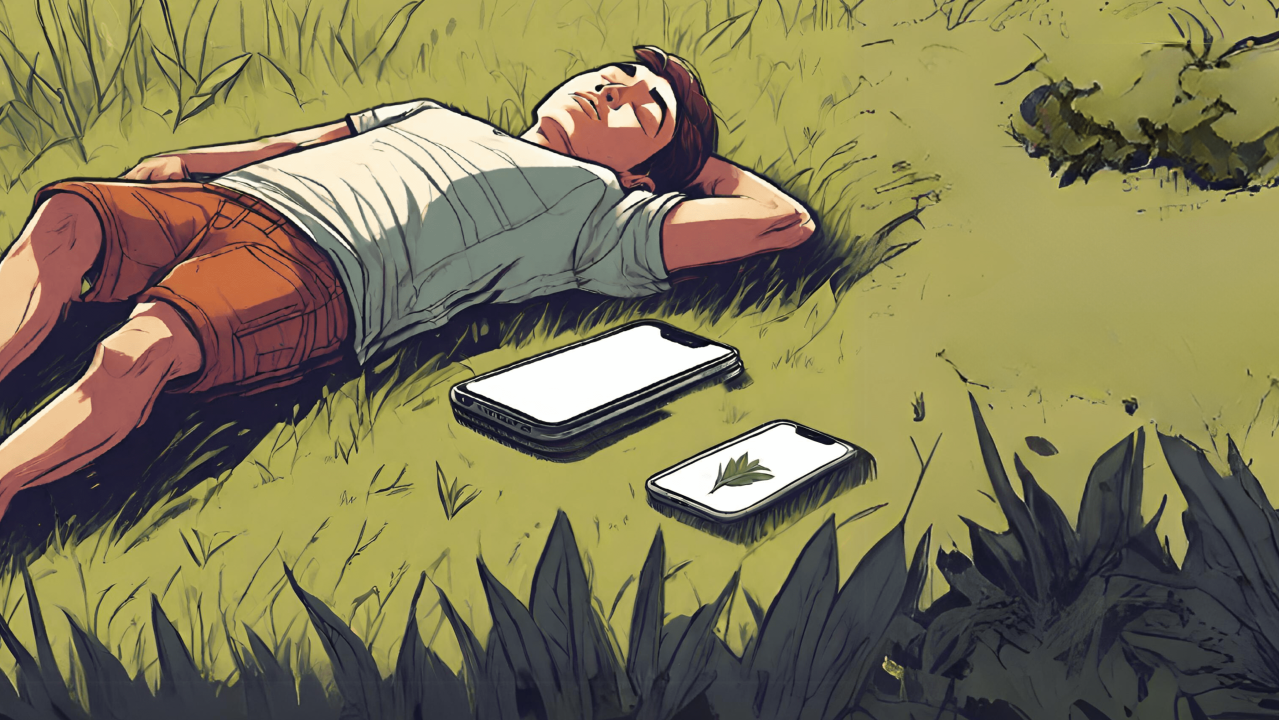
The experiment begins quietly.
You place your phone in a drawer, close your laptop, switch off the television, and suddenly the room feels different. Not empty, exactly — just unfamiliar. The soft glow of screens that usually hum in the background is gone. The air feels still.
Outside the window, the city carries on as usual. Cars pass. A neighbor walks their dog. Somewhere in the distance, someone’s music drifts faintly through an open window.
But inside your home, something has shifted.
For the next twenty-four hours, there will be no scrolling, no notifications, no quick answers from search engines. No digital map to guide a walk. No background podcast filling the silence.
Just time — moving at its natural pace.
At first, the absence feels strangely noticeable, like the quiet after a machine stops running.
Then the day begins.
The First Few Hours: Restlessness
The earliest stage of a technology-free day often brings a mild sense of disorientation.
Your hand reaches instinctively for a phone that isn’t there. You think of something interesting and momentarily wish you could look it up. You feel the subtle urge to fill pauses — the small empty spaces that usually belong to quick digital distractions.
This reflex reveals something most of us rarely notice: technology has quietly become our default companion.
Standing in line, waiting for coffee, sitting on the couch for a few minutes — each of these moments has been gently occupied by screens.
Without them, the mind becomes aware of its own restlessness.
But if you allow that restlessness to pass without immediately filling it, something interesting happens. The urge fades. The silence softens.
And the day slowly begins to open.
Rediscovering the Texture of Time
As the hours pass, the rhythm of the day begins to change.
Without the constant pull of digital updates, time stretches slightly. Breakfast lasts longer. A walk around the neighborhood becomes more observant. The mind begins to notice things it usually overlooks — the pattern of shadows on the sidewalk, the scent of a nearby bakery, the quiet choreography of daily life unfolding around you.
Conversation, too, feels different.
Without phones on the table or notifications interrupting the flow, discussions deepen naturally. People pause between thoughts. Laughter arrives more easily. There is less urgency to move on to the next topic.
Even solitary activities take on a new dimension.
Reading a physical book becomes immersive again. Cooking dinner feels less rushed. Music, when played intentionally, fills the room rather than competing with other digital noise.
The mind, it seems, begins to settle.
The Quiet Return of Boredom — and Creativity
One of the most surprising aspects of disconnecting from technology is the reappearance of boredom.
For years, boredom has been quietly eliminated by the endless availability of content. The moment we feel idle, a screen offers something to watch, read, or respond to.
But boredom, as it turns out, serves an important purpose.
It creates mental space.
When the mind is not constantly occupied, it begins to wander. Ideas drift in from unexpected directions. Thoughts connect in ways that feel creative rather than forced.
Many writers, designers, and thinkers credit their best ideas to moments when they were not actively searching for inspiration — long walks, quiet mornings, or simple daydreaming.
Without technology, these moments naturally return.
You might find yourself rearranging a room, starting a journal entry, or sketching out a new idea simply because your mind has room to explore again.
The Emotional Shift
Perhaps the most noticeable change during a technology-free day is emotional.
At first, there may be a faint anxiety — the feeling that you’re missing something important. A message, an update, a news alert.
But gradually, that tension dissolves.
In its place arrives something gentler: a sense of mental spaciousness.
Without the steady stream of external input, your attention turns inward. Thoughts become clearer. Emotions that were previously buried beneath busyness have space to surface.
You begin to notice your own pace — the natural rhythm of your energy and focus throughout the day.
And often, that rhythm is calmer than the one dictated by notifications.
Lessons from a Single Day Offline
Spending twenty-four hours without technology doesn’t require you to permanently abandon modern tools. Instead, it reveals something valuable about how they shape our daily lives.
Many people who try the experiment come away with a few quiet realizations.
Not every moment needs to be filled.
Silence and stillness are not empty — they often contain the clarity we’ve been looking for.
Attention is a precious resource.
Where we place it determines how we experience our days.
Presence changes relationships.
Whether with friends, family, or even strangers, undivided attention deepens human connection.
The mind benefits from pauses.
Creativity, reflection, and emotional balance thrive in spaces where constant stimulation is absent.
These insights rarely arrive with dramatic intensity. Instead, they unfold gently, like the slow clearing of a cloudy sky.
Returning to the Connected World
Eventually, the twenty-four hours end.
You open the drawer, pick up your phone, and the familiar glow returns. Messages appear. Updates stack neatly on the screen. The digital world resumes its steady rhythm.
But something inside you may feel slightly different.
You’ve seen how a day unfolds without the constant presence of technology. You’ve felt the calm that emerges when attention is no longer pulled in dozens of directions at once.
And that awareness changes how you interact with your devices going forward.
Perhaps you’ll leave the phone in another room during dinner. Maybe you’ll take occasional walks without headphones. Or designate a quiet Sunday morning where screens remain off a little longer.
Small adjustments, nothing dramatic.
The Quiet Gift of Disconnection
A full day without technology doesn’t transform life overnight.
But it does offer a gentle reminder.
Beneath the notifications, beneath the constant digital conversation, there is still a quieter world waiting for our attention — one made of sunlight through windows, long conversations, wandering thoughts, and moments that don’t require documentation.
Technology connects us in remarkable ways.
Yet sometimes, the most meaningful connection begins when we briefly step away from it.
And for twenty-four hours, that quiet space becomes visible again.
Leave a Reply