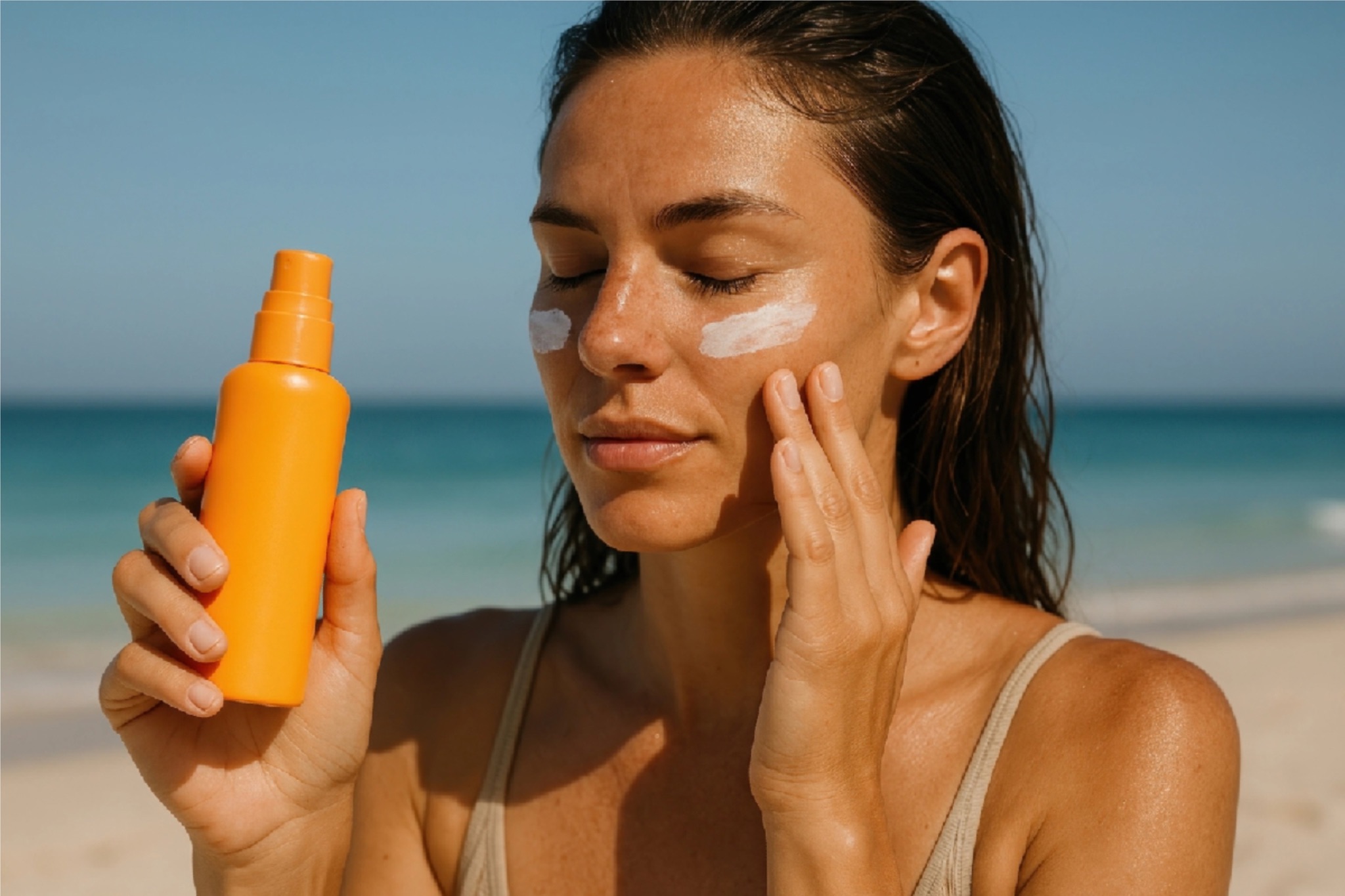
Sunscreen is often associated with outdoor activities such as beach trips or extended time in the sun. In reality, sun protection is an essential part of daily skincare. Ultraviolet (UV) radiation affects the skin throughout the year, regardless of weather conditions or indoor environments.
Consistent use of sunscreen helps protect the skin from premature aging, sun damage, and long-term health risks. Incorporating SPF into a daily routine is one of the most effective steps for maintaining healthy skin.
Why Daily SPF Is Important
Ultraviolet radiation reaches the skin even on cloudy days and can pass through glass windows. Two primary types of UV rays affect the skin:
UVA Rays
UVA rays penetrate deeply into the skin and contribute to premature aging, including wrinkles and loss of elasticity. They can also pass through glass, meaning exposure may occur indoors or while driving.
UVB Rays
UVB rays primarily affect the outer layers of the skin and are responsible for sunburn. Long-term exposure to UVB radiation increases the risk of skin damage and certain types of skin cancer.
Because these rays are present year-round, daily sunscreen use provides an important layer of protection.
Common Sunscreen Mistakes
Although many people use sunscreen occasionally, several common habits reduce its effectiveness.
Using Too Little Product
Adequate coverage is necessary for sunscreen to work properly. For the face and neck, approximately one teaspoon of sunscreen is recommended. For the body, a quantity roughly equivalent to a small shot glass is often suggested.
A simple guideline for the face is the “two-finger method,” which involves applying sunscreen along the length of the index and middle fingers before spreading it evenly over the skin.
Not Reapplying During the Day
Sunscreen effectiveness decreases over time due to natural skin oils, perspiration, and environmental exposure. Reapplication every two hours is generally recommended when spending time outdoors.
For individuals wearing makeup, products such as SPF mists, powders, or cushion formulations can make reapplication more convenient.
Relying Only on SPF in Makeup
Many cosmetic products contain SPF; however, they are typically applied in smaller amounts than required to achieve full protection. As a result, makeup alone may not provide sufficient coverage.
Applying a dedicated sunscreen as the final step of skincare before makeup ensures more reliable protection.
Overlooking Certain Areas
Some areas of the body are frequently missed during sunscreen application. These include:
- Lips
- Ears
- Neck (both front and back)
- Hairline or scalp part
Using lip balms with SPF and applying sunscreen carefully to these areas can help provide more complete coverage.
Skipping Sunscreen Indoors
Because UVA rays can penetrate glass, individuals who spend extended time near windows—whether at home, in the office, or while driving—may still experience UV exposure. Applying sunscreen during the day helps maintain protection even in indoor environments with natural light.
Chemical and Mineral Sunscreens
Sunscreen products are generally categorized into two types.
Chemical sunscreens absorb UV radiation and convert it into heat before it penetrates the skin. These formulations tend to feel lightweight and blend easily.
Mineral (physical) sunscreens contain ingredients such as zinc oxide or titanium dioxide that reflect UV rays away from the skin. They are often recommended for sensitive skin but may leave a slight visible cast on certain skin tones.
Some modern formulations combine both types to provide balanced protection and improved texture.
Final Thoughts
Daily sunscreen use is one of the most effective ways to support long-term skin health. Consistent protection helps reduce visible signs of aging, prevent sunburn, and lower the risk of cumulative sun damage.
Rather than viewing sunscreen as an occasional product, incorporating SPF into everyday skincare promotes healthier, more resilient skin over time. Regular application, proper coverage, and thoughtful reapplication throughout the day can make a significant difference in maintaining a balanced and protected complexion.
Leave a Reply