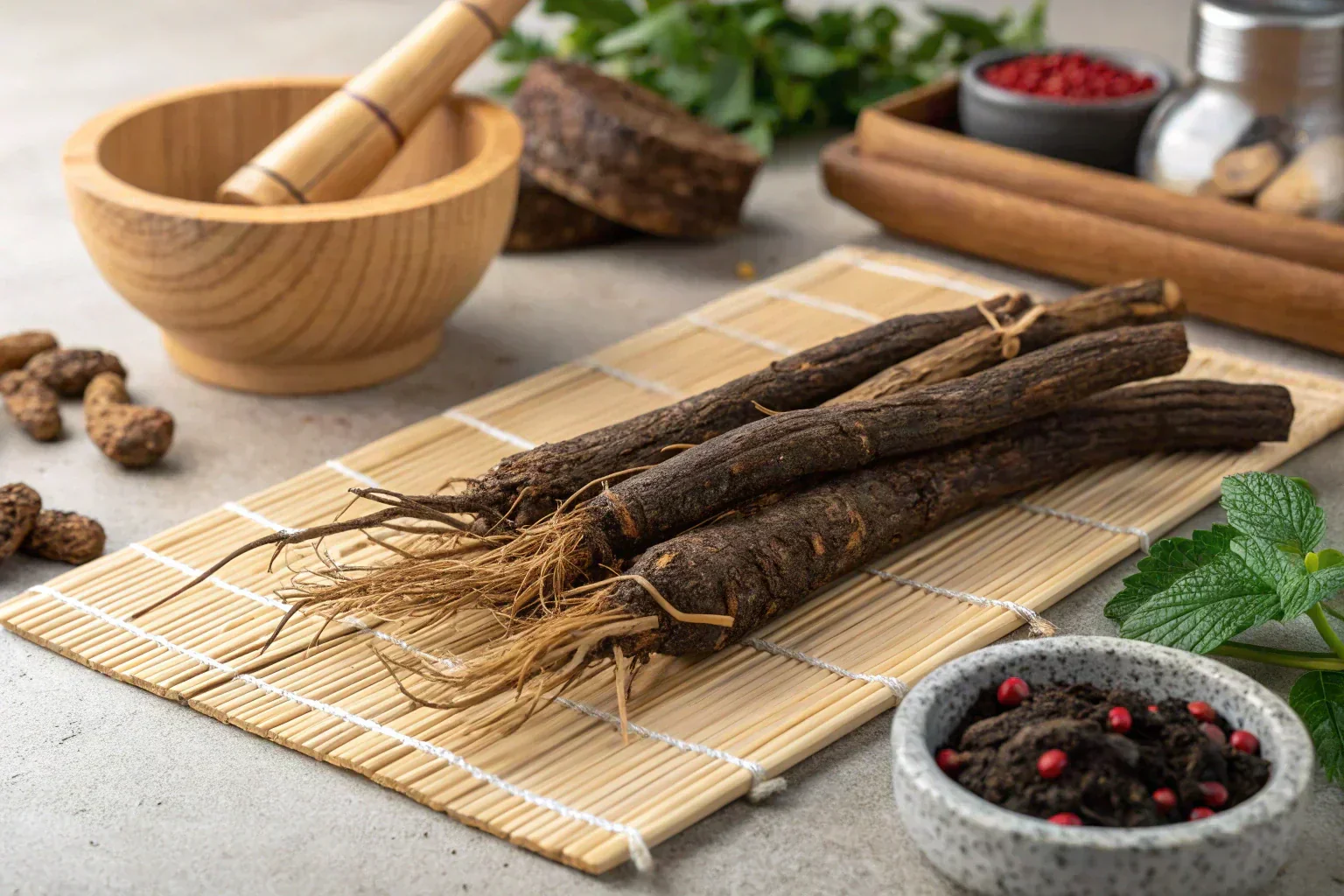
Long before skincare came in glass dropper bottles and clinical packaging, beauty was cultivated through plants.
Across Asia’s ancient medical traditions—whether in herbal pharmacies of China, Ayurvedic texts of India, or healing gardens of Korea—plants were observed with patience. Their roots, leaves, and extracts were studied not through microscopes but through generations of lived experience. Over centuries, certain botanicals earned quiet reverence for their ability to soothe skin, restore vitality, and maintain balance within the body.
Today, something remarkable is happening.
Modern dermatology and biochemical research are beginning to validate what traditional practitioners understood intuitively. Three plants in particular—licorice root, gotu kola, and ginseng—have moved from ancient herbal wisdom into contemporary scientific study. Their benefits, once described through philosophy and observation, are now supported by measurable biological effects.
In many ways, these plants represent a bridge between two worlds: the ancient language of nature and the precise vocabulary of modern science.
The Wisdom Carried in Roots
Traditional healing systems rarely viewed beauty as a surface concern. Skin health was considered a reflection of balance—circulation, nourishment, calmness within the body.
Licorice root appeared in Chinese herbal texts dating back more than two thousand years, valued as a harmonizing plant capable of calming inflammation and restoring equilibrium. Gotu kola was celebrated in Ayurvedic medicine as the “herb of longevity,” believed to support vitality of both skin and mind. Ginseng, meanwhile, became synonymous with endurance and rejuvenation across East Asia, revered for its ability to strengthen the body’s resilience.
These plants were not isolated ingredients but part of holistic systems of care. Their roles extended beyond cosmetic beauty into broader wellness rituals—teas, tonics, oils, and herbal preparations that nurtured the body from within.
What makes them especially compelling today is how closely modern research aligns with these traditional beliefs.
Licorice Root: Nature’s Gentle Brightener
Licorice root (Glycyrrhiza glabra) may seem like an unlikely beauty ingredient at first glance. Known widely as a flavoring in sweets and herbal teas, its skincare potential lies within a remarkable group of compounds found inside the root.
Among them is glabridin, a molecule that has drawn attention from dermatological researchers for its ability to influence melanin production in the skin. By helping regulate the activity of tyrosinase—the enzyme responsible for pigment formation—licorice root may assist in reducing the appearance of uneven tone and discoloration.
What distinguishes licorice root from many modern brightening ingredients is its calming nature. The plant contains flavonoids and glycyrrhizin, compounds known for their anti-inflammatory properties. This means that while it supports skin clarity, it simultaneously helps soothe redness and irritation.
In traditional herbal medicine, licorice was often described as a harmonizing herb—one that balanced and softened other ingredients. In skincare, that philosophy still holds true.
Licorice root brightens not by force, but through balance.
Gotu Kola: The Architect of Skin Resilience
Few botanicals have gained as much scientific attention in recent years as gotu kola (Centella asiatica).
Used for centuries across India, Sri Lanka, and Southeast Asia, gotu kola was traditionally believed to support longevity and mental clarity. Herbalists also applied it to wounds and irritated skin, noting its ability to encourage healing.
Modern research has uncovered why.
Gotu kola contains a group of compounds known as triterpenoids, including asiaticoside and madecassoside. These molecules have been shown to support collagen synthesis and strengthen the skin’s structural matrix. In simple terms, they help reinforce the scaffolding that keeps skin firm and resilient.
Beyond collagen support, gotu kola also appears to enhance skin barrier function, helping the epidermis retain moisture and protect itself from environmental stress.
This dual action—repairing and protecting—makes gotu kola particularly valuable in modern skincare, where urban environments, pollution, and stress often challenge the skin’s natural defenses.
It is a botanical that does not merely improve appearance; it strengthens the skin’s underlying architecture.
Ginseng: The Root of Renewal
If licorice root harmonizes and gotu kola strengthens, ginseng revitalizes.
For more than two thousand years, ginseng has held an almost mythic status in East Asian medicine. Often referred to as the “root of life,” it was prized for restoring energy, improving circulation, and enhancing resilience against fatigue.
The secret behind ginseng’s reputation lies in its ginsenosides, active compounds that influence cellular activity within the body.
In skincare, these compounds have been shown to stimulate microcirculation and encourage skin renewal. Improved circulation helps deliver oxygen and nutrients to skin cells, contributing to the healthy luminosity often associated with vitality.
Ginseng also offers antioxidant protection, helping the skin defend itself against oxidative stress—a major contributor to premature aging.
Perhaps most fascinating is ginseng’s ability to support cellular regeneration, which may help maintain elasticity and firmness over time.
In traditional medicine, ginseng was considered a plant that restored balance to the body’s energy. In modern skincare, that same philosophy translates into revitalized, energized skin.
Where Tradition Meets Evidence
What makes these three botanicals so compelling is not merely their history, but the way their traditional uses align with modern scientific discovery.
Licorice root calms inflammation and supports clarity.
Gotu kola rebuilds and protects the skin’s structure.
Ginseng revitalizes circulation and cellular renewal.
Together, they represent a holistic approach to skin health—one that addresses brightness, strength, and vitality simultaneously.
Their resurgence in modern skincare reflects a growing appreciation for ingredients that work with the body rather than against it. Instead of forcing rapid transformation, these plants support the skin’s natural intelligence.
And perhaps that is why they continue to endure.
A Philosophy Rooted in Patience
Ancient herbalists understood something that modern beauty culture is beginning to rediscover: the body thrives when supported gently and consistently.
Plants do not rush. Their effects unfold gradually, aligning with the body’s own rhythms of renewal and repair.
Licorice root, gotu kola, and ginseng embody this philosophy. They remind us that beauty is rarely the result of a single miracle ingredient. Instead, it emerges from balance—circulation, nourishment, resilience, and calm working together over time.
Incorporating botanical ingredients into skincare is not simply a trend toward natural products. It is part of a broader movement toward mindful beauty—one that respects tradition while embracing scientific understanding.
These plants have traveled across centuries to reach modern skincare shelves.
Perhaps their greatest lesson is this: sometimes the most advanced beauty wisdom has been quietly growing in nature all along.
Leave a Reply